The flag of Swan River First Nation
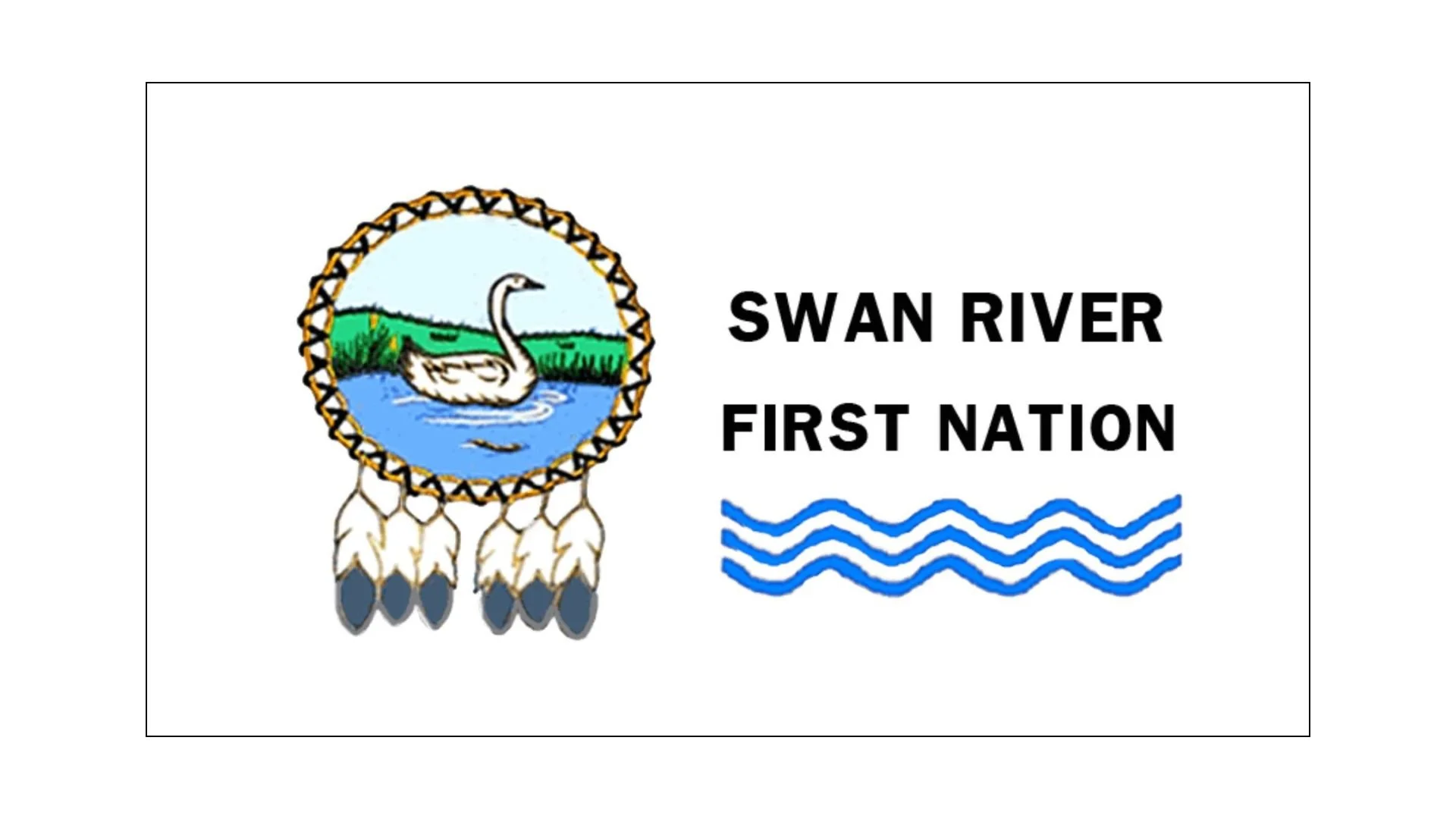
The flag of the Swan River First Nation (SRFN) is far more than a mere piece of colored fabric; it is a visual manifesto of the Woodland Cree people’s identity, their sacred relationship with the boreal landscape, and their enduring sovereignty as a Treaty 8 nation. Set against a clean white field, the flag’s central emblem serves as a narrative map of a people whose history is inextricably tied to the waters of the Lesser Slave Lake region in northern Alberta. To examine the flag is to trace the history of a community that has transitioned from a traditional seasonal lifestyle to a modern, self-governing nation while maintaining a profound spiritual connection to the environment.
At the heart of the flag is a circular seal, often stylized with the intricate webbing and hanging feathers of a dreamcatcher. This choice of framing is deeply intentional. In Cree culture, the dreamcatcher represents protection and the interconnectedness of all life—the physical world, the spiritual realm, and the ancestral past. By placing their national symbols within this circle, the Swan River First Nation asserts that their land and their people exist within a cycle of continuous protection and spiritual oversight.
The most prominent figure within this circle is the trumpeter swan, gliding serenely across blue water. This is a direct visual translation of the Nation’s name—wâpisiw-sîpiy in the Cree language, which translates to "Swan River." The swan is not merely a namesake; it is a symbol of the grace, resilience, and seasonal cycles that have defined the lives of the Woodland Cree for millennia. The swan’s presence on the water mirrors the geography of the community’s traditional territory, which fans out from the Swan Hills toward the southern shores of Lesser Slave Lake. The water itself is rendered in calm, rhythmic lines, representing the life-giving force of the river that has sustained the community through fishing and transportation long before the arrival of European traders.
Flanking the swan are green hills and a bright sky, representing the vast boreal forest and the meadows that provided the backdrop for the Nation’s traditional economy. For generations, the Swan River people lived in mobile family groups, moving with the seasons to hunt moose, trap furbearers, and gather medicinal plants. The green on the flag is a reminder of this "land-based" identity—a declaration that the Nation’s wealth and health are found in the integrity of the ecosystem.
Below the circular seal hang several eagle feathers. In many Indigenous cultures, the eagle is the messenger to the Creator, flying higher than any other bird. Its feathers are granted as marks of honor and represent values such as courage, honesty, and wisdom. On the flag, these feathers symbolize the spiritual strength of the leadership and the community. They serve as a reminder that the Nation’s governance is rooted in traditional laws and a moral responsibility to the ancestors and to future generations.
To the right of the central emblem, the flag features the bold text "SWAN RIVER FIRST NATION" underlined by three distinct, blue wavy lines. These lines are a powerful legal and historical statement. In the oral traditions surrounding the signing of Treaty 8 in 1899, the Crown’s representatives promised that Indigenous rights to hunt, fish, and trap would be protected "as long as the sun shines, the grass grows, and the rivers flow." By including these waves on their flag, the Swan River First Nation visually reinforces their status as a Treaty people. It is a reminder to the Canadian state and to the world that their right to the land is eternal and non-negotiable.
The history behind this symbolism is one of both cooperation and resistance. In the late 19th century, as the fur trade shifted and the Canadian government sought to expand westward, the leaders of the Swan River area recognized the need to secure their people's future. On June 21, 1899, at Lesser Slave Lake, the Swan River people were among the original signatories of Treaty 8. This was intended to be a nation-to-nation agreement based on peace and friendship. However, the subsequent century brought challenges, including the imposition of the Indian Act, the residential school system, and the encroachment of the oil and gas industry on traditional hunting grounds.
Throughout these challenges, the flag has remained a beacon of resilience. In recent decades, the Swan River First Nation has utilized its sovereign identity to become a leader in "Ecological Reconciliation." They have fought to protect the Swan River watershed from industrial contamination, arguing that to poison the water is to destroy the very identity represented on their flag. The flag flies today over the administration offices in the community near Kinuso, Alberta, and at the Nation's two reserves, Swan River 150E and Assineau River 150F. It is also a prominent fixture at the annual Culture Camp, where elders teach the youth how to skin hides, prepare traditional foods, and speak the Cree language.
In a modern context, the flag serves as a tool for political visibility. When SRFN leaders meet with provincial or federal officials, the flag stands behind them, asserting that they are not merely a "special interest group" but a sovereign government with a deep historical mandate. It distinguishes them from neighboring First Nations while also signaling their shared membership in the Treaty 8 Grand Council.
Ultimately, the flag of the Swan River First Nation is a synthesis of the past and the future. It honors the literal geography of the Swan River and the spiritual significance of the eagle and the dreamcatcher, while firmly grounding the community in its legal treaty rights. For the members of the Nation, looking at the flag is an act of remembrance—a way to see their history, their land, and their sovereignty reflected in a single, powerful image. It tells the story of a people who, like the swan on the water, move with grace and strength through a changing world, always anchored by the rivers that flow and the traditions that endure.
Recently Posted


Categories
- Alberta 29
- Armed Forces 41
- British Columbia 27
- Canada 337
- Cities 161
- County / Municipality / Regional District / Township 8
- General Information 2
- Government 18
- Historical 4
- Indigenous 44
- International Flags 59
- International Organizations 5
- Manitoba 19
- Miscellaneous 4
- New Brunswick 10
- Newfoundland 12
- Northwest Territories 7
- Nova Scotia 14
- Nunavut 6
- Ontario 43
- Police 1
- Prince Edward Island 5
- Quebec 77
- Royalty 16
- Saskatchewan 16
- Schools 14
- Sports 28
- Yukon 5