The flag of the Commissioner of the Yukon
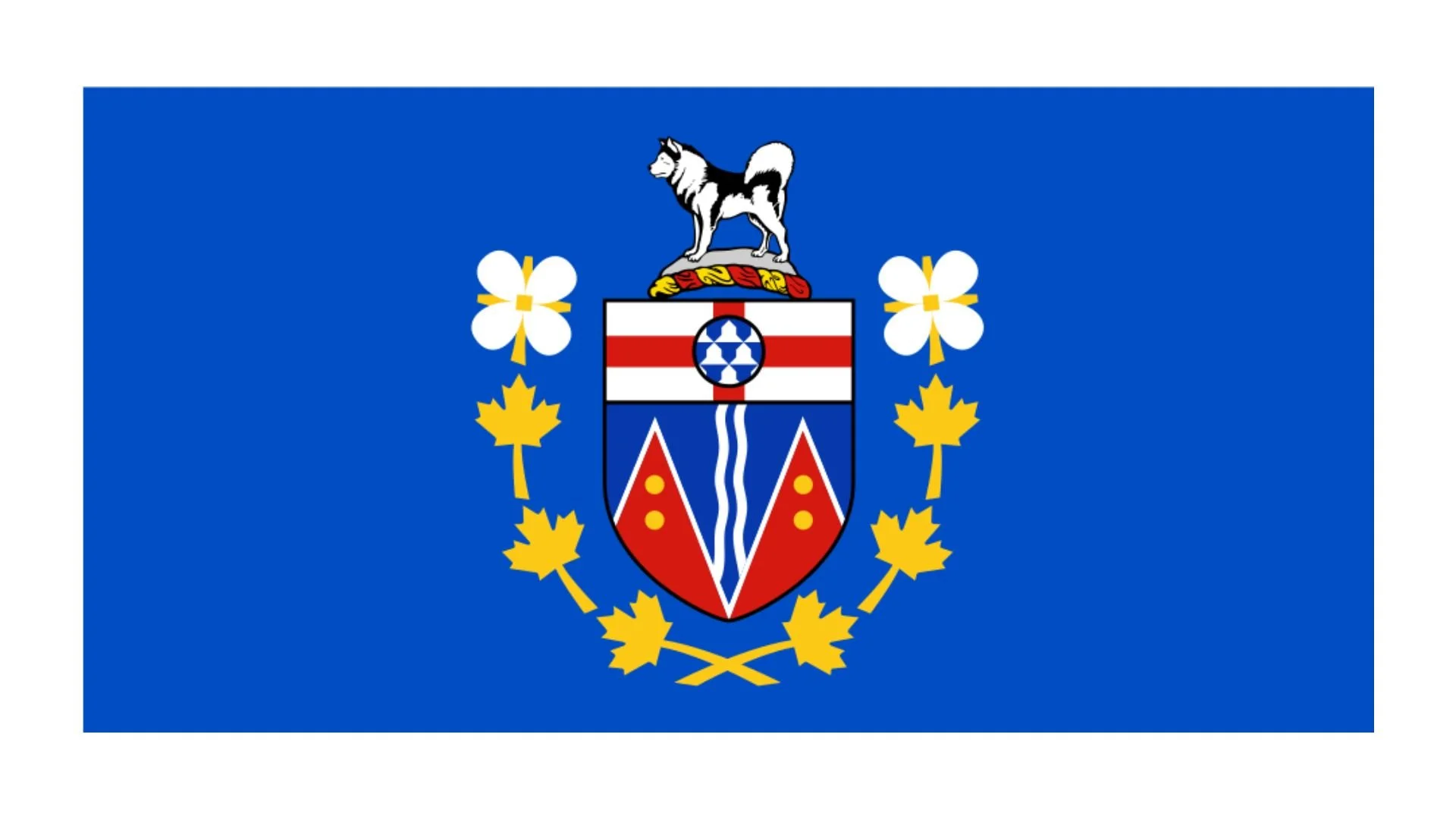
The flag of the Commissioner of Yukon is a potent symbol of territorial identity, reflecting the unique constitutional position of the Commissioner and the rich cultural and natural landscape of Canada’s northern wilderness. As a personal standard, it serves to identify the dignitary holding the office, appearing on official vehicles and outside buildings when the Commissioner is in attendance. This flag follows the established pattern of Canadian vice-regal flags, featuring the territorial coat of arms at its heart, set against a backdrop of deep royal blue.
To understand the flag, one must first understand the history of the office it represents. The position of Commissioner has undergone significant transformation since its inception in 1897. In the early days of the Klondike Gold Rush, the Commissioner was a powerful federal appointee with broad executive authority over the territory. This era of direct federal control was symbolized by various titles, including "Gold Commissioner" and "Controller," reflecting the territory’s primary economic driver: gold.
A pivotal shift occurred in 1979 when responsible government was established in Yukon. Following instructions from federal minister Jake Epp, the Commissioner’s role was adjusted to be analogous to that of a provincial Lieutenant Governor. While the Commissioner is an appointee of the federal government rather than a direct representative of the Crown (unlike provincial lieutenant governors), they perform nearly identical ceremonial and constitutional duties, such as swearing in the Legislative Assembly and granting royal assent to bills.
The most striking feature distinguishing the Commissioner’s flag from the standard Yukon territorial flag (which is a green, white, and blue tricolour) is its royal blue field. This choice follows the uniform design standard adopted for most Canadian lieutenant governors and territorial commissioners since 1980. The blue background provides a regal and formal foundation for the central badge, signifying the authority and continuity of the territorial government.
At the center of the flag lies the Commissioner’s Badge of Office, a complex heraldic design that integrates the territorial arms with specific symbolic frames. The core of the badge is the Yukon Coat of Arms, which was granted by Queen Elizabeth II in 1956. Its components are a visual shorthand for the territory’s history and geography. The Cross of St. George is located at the top and it honors early English explorers and fur traders. Two blue and white vertical lines represent the Yukon River and the gold-bearing creeks of the Klondike. Red spire-like forms signify Yukon’s majestic mountains, while the gold circles within them represent its vast mineral resources. Surmounting the shield is a proud Malamute dog standing on a mound of snow. This recognizes the stamina and loyalty of the work dogs that were indispensable to early Yukoners.
Encircling the coat of arms is a wreath composed of six gold maple leaves and two blossoms of fireweed. The maple leaves represent Yukon’s place within the Canadian confederation, while the fireweed (the official territorial flower since 1957) symbolizes the resilience of the northern landscape, as it is often the first plant to bloom after a forest fire.
The flag of the Commissioner of Yukon is more than a formal heraldic display; it is a visual record of the territory's journey from a federally managed gold-mining district to a modern, self-governing entity. By combining the traditional heraldry of the 1950s with the vice-regal blue field of the 1980s, the flag perfectly captures the dual nature of the Commissioner’s office: a federal link that serves as a cornerstone of local democratic tradition.
Recently Posted



Categories
- Alberta 27
- Armed Forces 40
- British Columbia 26
- Canada 326
- Cities 156
- County / Municipality / Regional District / Township 8
- General Information 1
- Government 18
- Historical 4
- Indigenous 41
- International Flags 57
- International Organizations 5
- Manitoba 18
- Miscellaneous 4
- New Brunswick 9
- Newfoundland 12
- Northwest Territories 7
- Nova Scotia 14
- Nunavut 6
- Ontario 41
- Police 1
- Prince Edward Island 5
- Quebec 73
- Royalty 16
- Saskatchewan 15
- Schools 13
- Sports 27
- Yukon 5