The flag of Gambler First Nation
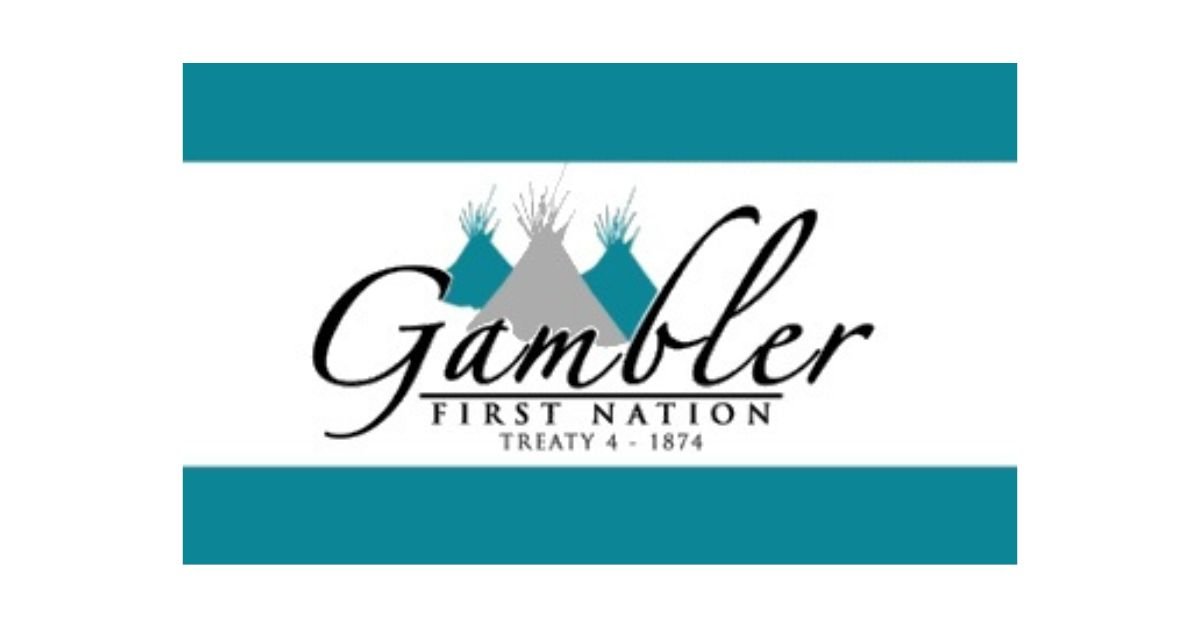
The flag of Gambler Lake First Nation (also known sometimes as Gambler First Nation) is a vivid emblem of identity, heritage, and sovereignty for its people. Located in Western Manitoba, Gambler First Nation is an Ojibwe community, bound by Treaty 4. The flag, adopted fairly recently, is a visual representation of the Nation’s culture, aspirations, and its relationship to land and treaty.
The Gambler Lake First Nation flag features a bold, simple field divided into three horizontal bands: a band at the top, one at the bottom, and a central band of contrasting colour. The top and bottom bands are blue, representing water, sky, or the natural world, elements central to Ojibwe culture and to the physical geography of the Nation. In the centre white band, the community’s logo is placed prominently.
The logo consists of three tipis, traditional conical dwellings which symbolize shelter, community, tradition, and continuity. Beneath them appears text stating “Gambler / FIRST NATION / TREATY 4 – 1874,” linking the Nation explicitly to its treaty relationship with the Crown and acknowledging the historical roots of its rights and identity. The blue bands are separated from the central white band by fimbriations, thin dividing line, that visually frame the white field and focus attention on the logo and text.
Every element of the flag carries layered meaning. The tipis are more than architectural forms—they signal the dwelling places of ancestors, the gatherings of families, the cultural ceremonies, and the social cohesion that holds the Nation together. They look both backward (to tradition) and forward (to continuity and self-determination).
The Treaty 4 reference is crucial—it marks the formal relationship between Gambler First Nation and the Canadian Crown, established in 1874, under which certain rights and promises are recognized. Including “Treaty 4 – 1874” on the flag asserts these rights, roots the community’s identity in history, and reminds both community members and outsiders of the treaty obligations.
The use of blue has multiple resonances: water is foundational to life, to traditional livelihoods like fishing; sky evokes freedom, expansiveness; the colours serve also to make the flag visually striking and recognizable from afar. The white middle band offers contrast and clarity for the logo and the treaty text. The fimbriations underscore separation of symbolic domains while keeping them connected.
Flags for First Nations like Gambler Lake carry importance beyond decoration. They are rallying symbols for community pride, asserting presence, and identity, both within the Nation and in broader Canadian society. In public ceremonies, educational contexts, treaty discussions, or meetings with governmental bodies, the flag is a visual declaration of who the people are, where they come from, and what they stand for.
Moreover, the adoption of a formal flag reflects self-governance, a conscious effort to represent the Nation’s image on its own terms. It is a visual equivalent of a written constitution or governance document, something that can be displayed, seen, recognized.
The flag of Gambler Lake First Nation is simple in layout, but rich in meaning. Its elements—blue bands, white central band, tipis, treaty text, combine to form a potent symbol of community, treaty rights, culture, and continuity. It reminds both insiders and outsiders of the Nation’s story: its traditions, its claims, its protections under treaty, and its ongoing presence in the land. Flags are powerful because they are visible; for Gambler First Nation, their flag is a beacon of identity and heritage.
Recently Posted

Categories
- Alberta 27
- Armed Forces 40
- British Columbia 24
- Canada 322
- Cities 155
- County / Municipality / Regional District / Township 7
- General Information 1
- Government 18
- Historical 4
- Indigenous 41
- International Flags 57
- International Organizations 5
- Manitoba 18
- Miscellaneous 4
- New Brunswick 9
- Newfoundland 12
- Northwest Territories 7
- Nova Scotia 14
- Nunavut 6
- Ontario 41
- Police 1
- Prince Edward Island 5
- Quebec 72
- Royalty 15
- Saskatchewan 15
- Schools 13
- Sports 26
- Yukon 4