The flag of Cyprus
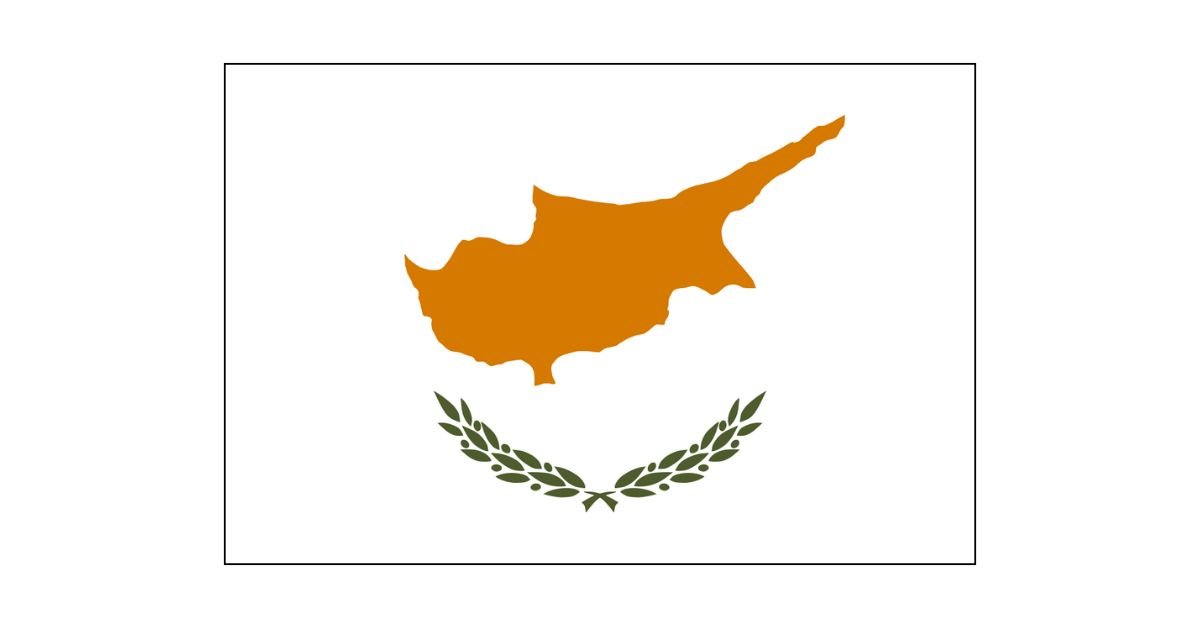
The flag of Cyprus is a unique and symbolic national emblem that reflects the country’s geography, culture, and desire for peace. Officially adopted on August 16, 1960, following Cyprus’s independence from British colonial rule, the flag stands out among national flags for its use of a map and its peace-oriented imagery. Its design is rooted in a vision of unity, created to transcend the ethnic divisions between the island’s two major communities: Greek Cypriots and Turkish Cypriots.
The flag consists of a white field featuring a copper-orange silhouette of the island at its center, with two crossed olive branches beneath it. Each of these elements carries deep meaning, directly referencing the island’s name, natural features, and aspirations.
The central feature of the flag is the orange-gold depiction of the island itself. This unusual inclusion of a map on a national flag serves as a powerful visual anchor. The colour was chosen to symbolize copper, which has been mined on the island since ancient times. In fact, the very name “Cyprus” is believed to have originated from the Greek word kypros, meaning copper. The island’s rich mineral resources, especially in antiquity, made it a valuable center of trade and conflict, contributing significantly to its complex history.
Beneath the map are two green olive branches, crossed in a gesture of peace. The olive branch is a universally recognized symbol of reconciliation and harmony. In the context of Cyprus, the branches represent the hope for peaceful coexistence between the island’s two major ethnic communities: the Greek Cypriots, who make up the majority, and the Turkish Cypriots. The use of two branches, rather than one, is deliberate—symbolizing equality and mutual respect between the communities.
The white background of the flag further emphasizes peace and neutrality. In contrast to many national flags that utilize bold and assertive colours to represent power or revolution, Cyprus’s flag chooses a calm and serene palette, aligning with its foundational principles of cooperation and unity. This peaceful imagery was especially significant in 1960, when the newly independent republic sought to forge a national identity that was inclusive and balanced.
The flag’s design was the result of a public competition organized by the newly formed government. Notably, it was required that the design not include blue or red—the traditional colours of Greece and Turkey, respectively—nor any religious symbols, such as the Christian cross or the Islamic crescent. This was an intentional effort to avoid favoring either community and to promote a shared Cypriot identity.
However, despite its inclusive symbolism, the ideal of unity represented by the flag has faced challenges. In 1974, following a coup d’état by Greek Cypriot nationalists and a subsequent Turkish military intervention, the island was effectively divided into the Republic of Cyprus in the south and the Turkish Republic of Northern Cyprus in the north, the latter recognized only by Turkey. Today, the official flag of Cyprus is used primarily in the internationally recognized Republic of Cyprus, while the north uses a different flag.
Recently Posted


Categories
- Alberta 27
- Armed Forces 40
- British Columbia 26
- Canada 326
- Cities 156
- County / Municipality / Regional District / Township 8
- General Information 1
- Government 18
- Historical 4
- Indigenous 41
- International Flags 58
- International Organizations 5
- Manitoba 18
- Miscellaneous 4
- New Brunswick 9
- Newfoundland 12
- Northwest Territories 7
- Nova Scotia 14
- Nunavut 6
- Ontario 41
- Police 1
- Prince Edward Island 5
- Quebec 73
- Royalty 16
- Saskatchewan 15
- Schools 13
- Sports 27
- Yukon 5