The flag of Langenburg, Saskatchewan
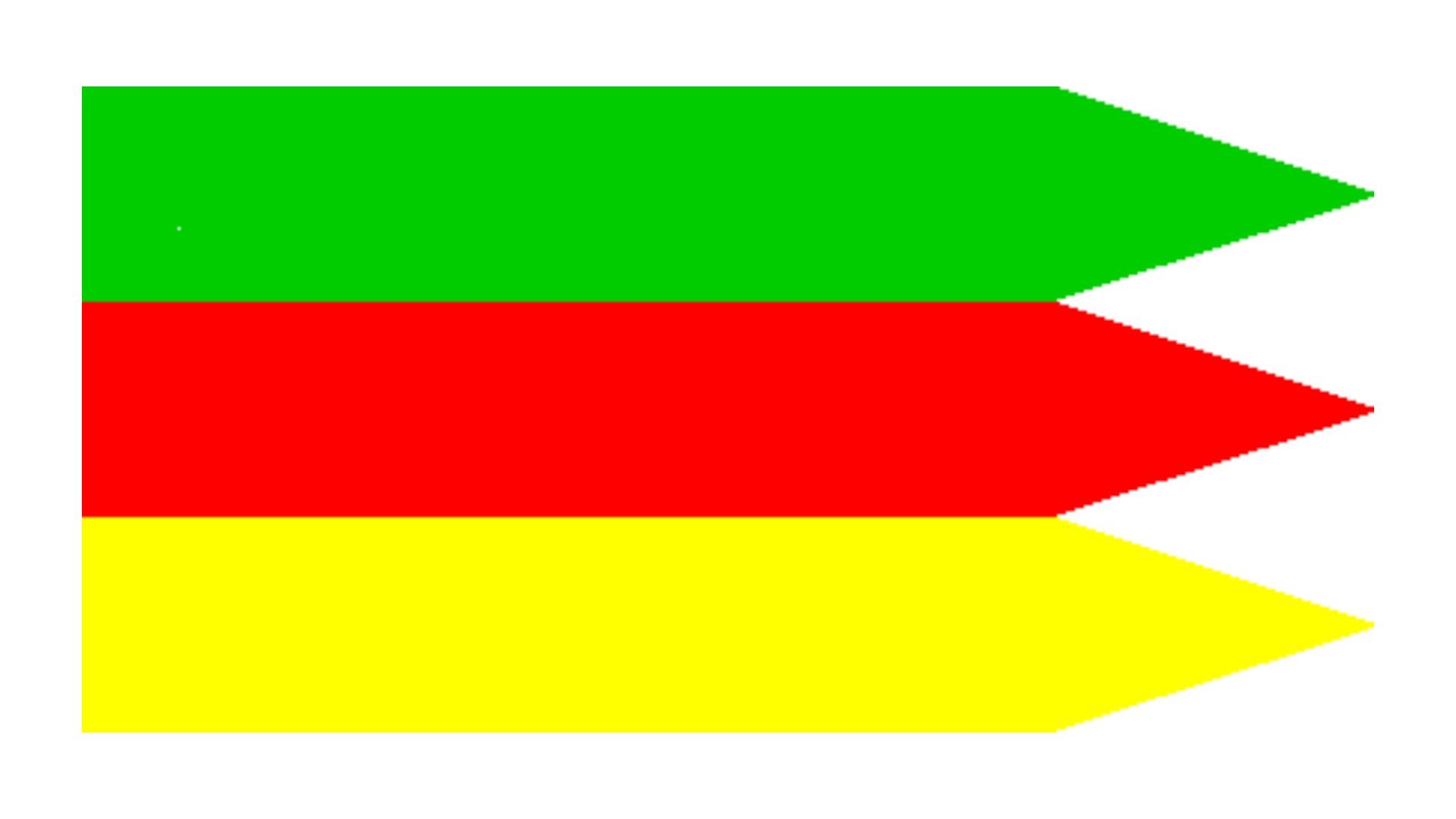
The flag of Langenburg, Saskatchewan, is a striking example of municipal heraldry that visually anchors the community’s identity in its unique geography and European heritage. While many town flags rely on standard rectangular proportions, Langenburg’s distinctive three-pointed design—often seen brightening the town's highways—mirrors the vibrancy of this historic community. To understand the flag’s significance, one must explore the narrative of "Colony Hohenlohe," a settlement born from a royal recommendation that transformed the vast Saskatchewan prairies into a thriving multicultural hub.
The historical foundation of Langenburg is inextricably linked to German nobility, a rarity in the landscape of prairie pioneering. In 1883, Prince Hohenlohe von Langenburg visited Western Canada and was so impressed by the vast potential of the landscape that he recommended it as a prime destination for German emigrants. By 1886, the first German settlers arrived, establishing what was known as "Colony Hohenlohe." This royal connection gave the town its name, as it was named after the city of Langenburg in Germany, where the Prince resided. This pedigree provided the fledgling community with a sense of prestige and a direct cultural link to the Old World, a history that is still celebrated today.
The town's early years were defined by rapid pioneering growth and the arrival of the Manitoba & North-Western Railway in the winter of 1886–87. By 1888, Langenburg boasted a store, a post office, and a station that served as a vital gateway for a diverse influx of immigrants, including British, Russian, Scandinavian, and Belgian settlers. This multicultural influx turned the royal German experiment into a robust Canadian town. The flag serves as a modern representation of this growth, distilling the town's history into a clean, geometric form that is easily recognizable to those traveling through the region.
Visually, the flag is notable for its unconventional three-pointed (triangular) fly. It is primarily composed of three bold colors—green, red, and yellow—arranged in horizontal or vertical bands that terminate in sharp points. This specific design is reminiscent of the "gonfalon" or "pennant" styles used in European heraldry, perhaps a subtle nod to the town’s namesake in Germany. The use of green, yellow, and red is particularly appropriate for a Saskatchewan community. Green symbolizes the fertile land and the promise of growth; yellow represents the golden fields of grain and the "potash gold" that sparked a population boom in the late 1950s; and red signifies the passion of the community and the historic prairie fires that once swept the untamed land.
Observations of the flag within the community reveal a flexible and organic approach to its design. While the core colors remain constant, the flag is often seen in various configurations on municipal streetlamps and town buildings. This versatility reflects a community that is secure in its identity, where the specific order of the colors is less important than the collective impact of the green, red, and yellow together. The three points of the flag can also be seen as representing the three pillars of the local economy: agriculture, the potash industry, and the town's role as a regional service center for the Yellowhead Highway corridor.
The flag’s colors also reflect the industrial shift that propelled Langenburg from a quiet hamlet to a prosperous town. Following its incorporation as a town in 1959, Langenburg experienced an era of unprecedented expansion. The discovery of potash south of the community transformed the local labor force and doubled the population within a single decade. The flag, raised during this era of modernization, became a banner of progress. It represents a town that has successfully navigated the transition from a 19th-century royal experiment to a 21st-century hub of industry and culture.
In conclusion, the flag of Langenburg is a triumph of municipal branding that honors its origins while looking toward the future. By utilizing a unique three-pointed shape and a vibrant prairie-inspired palette, it successfully distinguishes the town from its neighbors. It stands as a proud sentinel for those traveling along Highway No. 16, a reminder of the German prince's vision and the generations of settlers who worked to turn that vision into a thriving reality. Whether viewed at the George Layh Theatre or the Langenburg Homestead Museum, the flag remains a steadfast symbol of a community that is as sharp and enduring as the three points on its banner.
Recently Posted



Categories
- Alberta 29
- Armed Forces 41
- British Columbia 27
- Canada 344
- Cities 164
- County / Municipality / Regional District / Township 8
- General Information 3
- Government 18
- Historical 4
- Indigenous 45
- International Flags 60
- International Organizations 5
- Manitoba 19
- Miscellaneous 4
- New Brunswick 10
- Newfoundland 12
- Northwest Territories 7
- Nova Scotia 15
- Nunavut 6
- Ontario 44
- Police 1
- Prince Edward Island 5
- Quebec 79
- Royalty 17
- Saskatchewan 17
- Schools 14
- Sports 29
- Yukon 5