North Caribou Lake First Nation
The flag of Austria
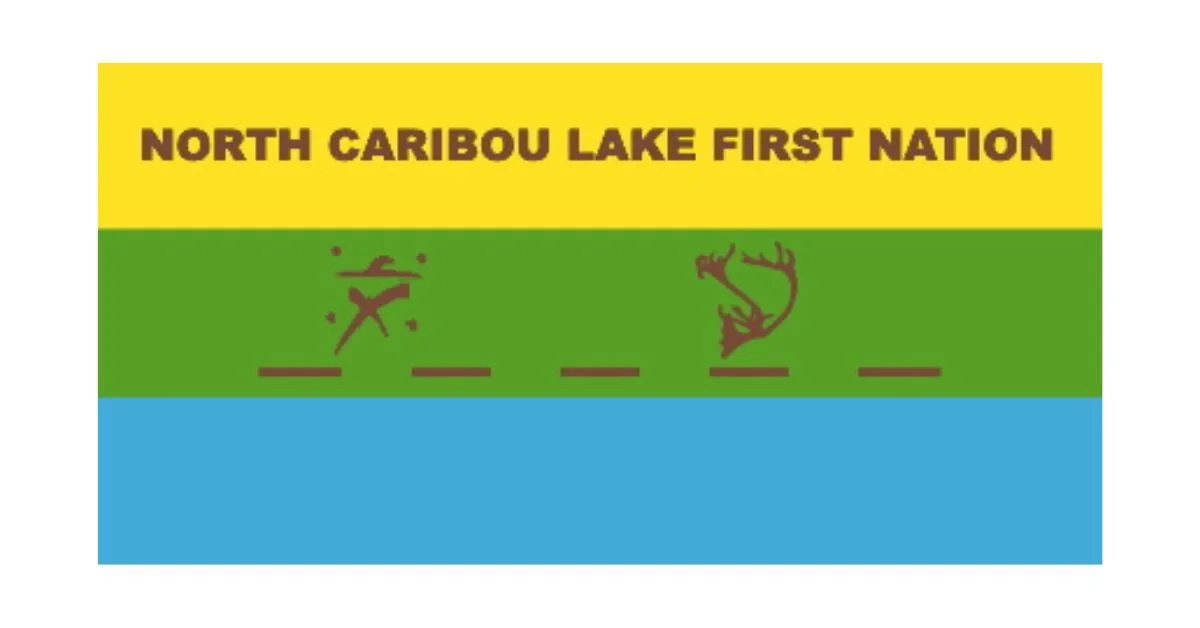
The flag of North Caribou Lake First Nation features a striking and meaningful tricolour layout—horizontal bands of yellow, green, and blue—with the community name prominently displayed, accompanied by distinctive graphics in the green stripe.
The uppermost band is a vibrant yellow, symbolizing warmth, energy, and communal vitality. The central green stripe carries the graphic elements and signifies life, the natural environment, and connection to the land. Within this stripe, the community’s name is rendered in brown lettering across the yellow field above and the green area itself. The lower band is a deep blue, representing the lakes and water that define the region—especially Weagamow (“Round”) Lake, around which the First Nation community is centered.
On the green stripe, a stylistic emblem appears—though online descriptions don’t fully detail its form, the graphics likely depict cultural or geographic motifs important to the community; these might include stylized water shapes, local wildlife, or symbolic patterns rooted in Oji-Cree tradition and connection to the lake and land.
The name “North Caribou Lake First Nation” appears on the flag, usually in brown letters, linking directly to the band’s official designation under Indigenous Services Canada. The flag’s alternative local names—Wiyaagamaa, meaning “Round Lake” in Oji-Cree, or simply Weagamow First Nation—further root the symbol in traditional language and place-based identity.
North Caribou Lake First Nation is an Oji‑Cree community situated approximately 320 km north of Sioux Lookout, Ontario, on the shores of Weagamow Lake.The flag is part of a broader movement among Indigenous communities in Canada to create flags that reflect their distinct heritage, lands, and community identity in a visually resonant and positive format.
The flag is likely displayed at community events, in the band office, and during cultural celebrations. Though less documented in mainstream databases, such flags play crucial roles in asserting sovereignty, pride, and visual recognition in Indigenous and intergovernmental contexts.
As the community continues to grow—embracing infrastructure improvements such as connection to Ontario’s power grid and expanded services—the flag remains a symbol of unity and identity. It bridges traditional Oji‑Cree heritage, treaty relationships (Treaty 9 adhesion), and modern governance structures within Nishnawbe Aski Nation and Windigo First Nations Council.
Recently Posted
Categories
- Alberta 25
- Armed Forces 37
- British Columbia 22
- Canada 299
- Cities 145
- County / Municipality / Regional District / Township 6
- Government 17
- Historical 3
- Indigenous 38
- International Flags 54
- International Organizations 5
- Manitoba 17
- Miscellaneous 4
- New Brunswick 7
- Newfoundland 12
- Northwest Territories 5
- Nova Scotia 13
- Nunavut 6
- Ontario 40
- Police 1
- Prince Edward Island 5
- Quebec 66
- Royalty 13
- Saskatchewan 13
- Schools 11
- Sports 24
- Yukon 4