The flag of Conseil des Atikamekw de Wemotaci
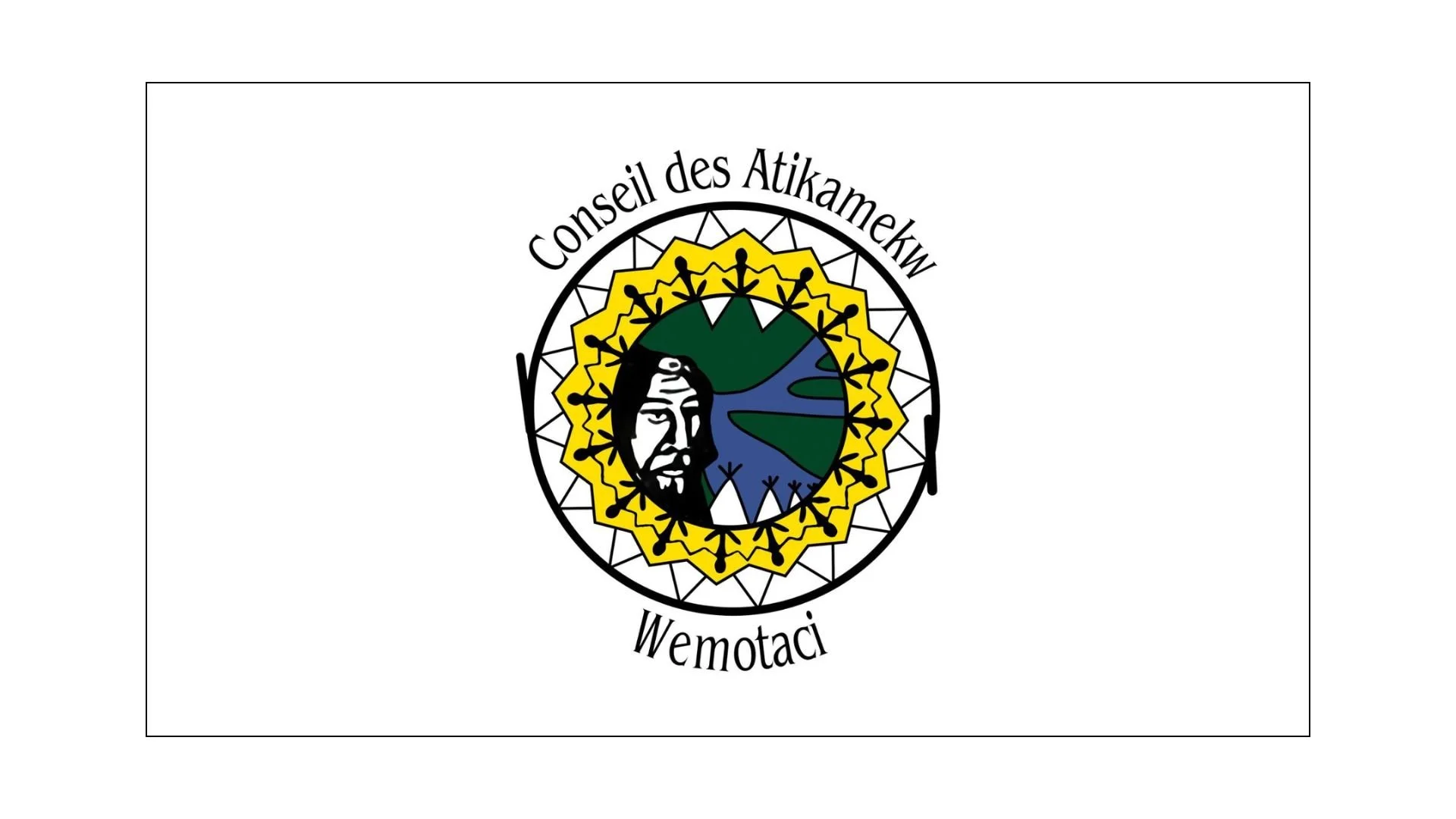
The flag of the Conseil des Atikamekw de Wemotaci is a vibrant and deeply symbolic emblem that encapsulates the identity, history, and spiritual connection to the land of the Atikamekw people. Set against a clean white background, the central seal acts as a visual narrative of a nation that has thrived in the heart of what is now Quebec for millennia. This flag is not just a bureaucratic marker; it is a declaration of sovereignty and a tribute to the "People of the Bark."
The community of Wemotaci (formerly known as Weymontachie) is located on the north shore of the Saint-Maurice River, approximately 115 kilometers north of La Tuque. Its name, in the Atikamekw language, means "the mountain from which one observes," referring to a prominent hill that served as a lookout point for the community.
Historically, the Atikamekw were a nomadic people, traveling throughout their vast ancestral territory known as Nitaskinan. Wemotaci became a focal point for trade and gathering in the mid-19th century when the Hudson's Bay Company established a post there. Despite the pressures of colonization and the industrialization of the forestry sector, the Atikamekw of Wemotaci have maintained a remarkably high level of cultural and linguistic preservation; the Atikamekw language is still the primary tongue spoken within the community today.
The Conseil des Atikamekw de Wemotaci serves as the governing body, working to protect the rights and heritage of its members. The adoption of their specific flag and seal was a key step in asserting their distinct identity within the broader Atikamekw Nation (which also includes the communities of Manawan and Opitciwan).
The flag’s design is a complex circular composition, rich with traditional Indigenous motifs and specific references to the Wemotaci landscape. The entire emblem is framed by a stylized dreamcatcher (asasepikwan). In many Indigenous cultures, the dreamcatcher is a symbol of protection, intended to filter out negative energy and allow only positive thoughts and dreams to pass through. Its presence on the flag signifies the Council’s role in protecting the well-being and future aspirations of its people.
Surrounding the inner landscape is a bright yellow sun, designed with jagged edges that resemble a compass or a star. At each point of the sun’s inner circle, there are stylized black figures holding hands. This represents community unity, strength, and the interconnectedness of the families that make up Wemotaci. It serves as a reminder that the Council’s power is derived from the collective will and support of its people.
Occupying the left side of the inner circle is the striking black-and-white silhouette of an Atikamekw Elder. This figure represents ancestral wisdom and the transmission of knowledge from generation to generation. The placement of the face looking toward the landscape suggests a watchful guardianship over the territory and a deep, contemplative connection to the natural world.
The right side of the inner circle features a colorful depiction of the Nitaskinan. The green mountains represent the lush forests and hills that characterize the region. The Atikamekw identity is inseparable from the forest, which has provided them with medicine, food, and materials (specifically birch bark) for centuries. The blue river signifies the Saint-Maurice River, the lifeblood of the community that has historically served as a highway for birch-bark canoes. The tipis at the bottom of the landscape, white tipis are visible. These represent the traditional home and the enduring presence of the Atikamekw on the land. They symbolize hospitality, family, and the roots of the community.
Today, the flag of the Conseil des Atikamekw de Wemotaci flies prominently at the Council office and during community gatherings, such as the annual pow-wows. It serves as a powerful tool for visual sovereignty, especially during land-claim negotiations and environmental protection efforts. The flag bridges the gap between the nomadic traditions of the past and the political realities of the present. By combining the image of the Elder with the symbols of the modern Council, the flag reminds every "Wemotaci-iriniw" (person of Wemotaci) that while their governance may evolve, their spirit remains rooted in the mountains and rivers of their ancestors.
Recently Posted

Categories
- Alberta 27
- Armed Forces 40
- British Columbia 26
- Canada 330
- Cities 159
- County / Municipality / Regional District / Township 8
- General Information 2
- Government 18
- Historical 4
- Indigenous 42
- International Flags 58
- International Organizations 5
- Manitoba 18
- Miscellaneous 4
- New Brunswick 10
- Newfoundland 12
- Northwest Territories 7
- Nova Scotia 14
- Nunavut 6
- Ontario 41
- Police 1
- Prince Edward Island 5
- Quebec 76
- Royalty 16
- Saskatchewan 15
- Schools 13
- Sports 27
- Yukon 5