Canadian Army Battle Flag
Canadian Army Battle Flag
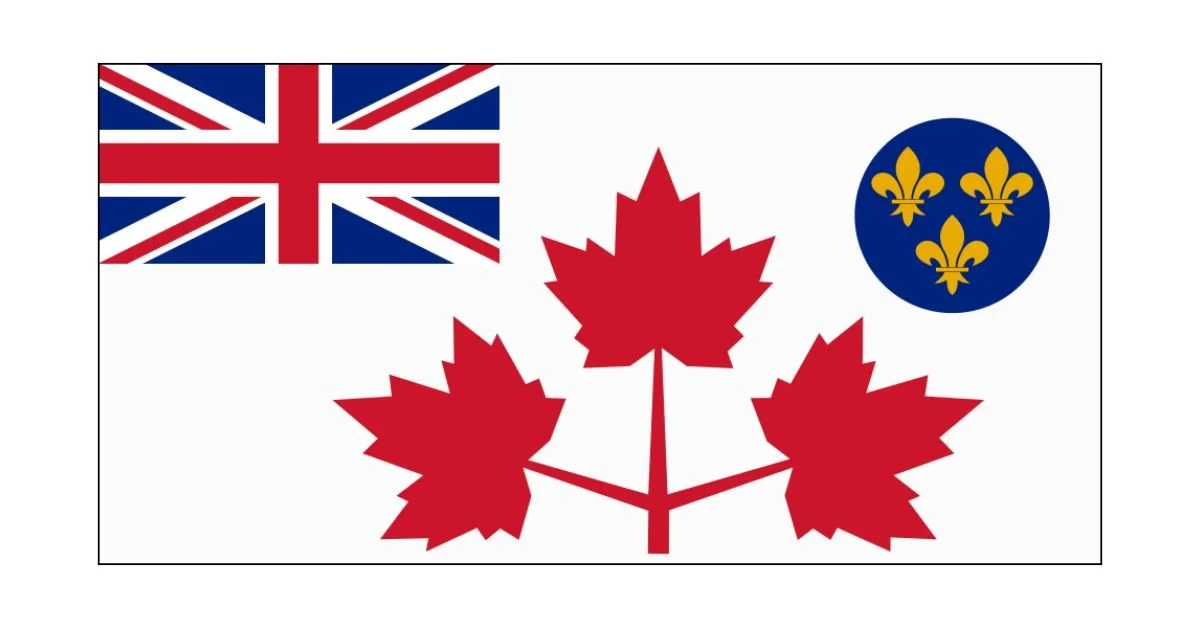
The Canadian Army Battle Flag is a richly symbolic emblem that blends historical heritage, national identity, and military tradition into a single, cohesive design. Unlike the contemporary Canadian Army flag used today, this particular flag reflects an earlier or alternative conceptual representation of Canadian military identity—one rooted in the country’s imperial past as well as its bilingual and multicultural heritage. Its structure, iconography, and color symbolism together create a flag that is both visually striking and historically evocative.
The most prominent feature of the flag is the trio of red maple leaves branching from a central stem. These leaves immediately invoke the iconic symbol of Canada and establish the flag’s national character. Unlike the single stylized maple leaf on the current national flag, the three-leaf arrangement suggests unity among Canada’s regions or peoples. In the context of a military flag, the triad may also symbolize the unity of the armed services—land, sea, and air—or the unity of soldiers in the field. The bright red hue reinforces associations with bravery, sacrifice, and remembrance, themes deeply connected to Canada’s military history.
In the upper left canton appears the Union Jack, a symbol historically used in many Canadian flags prior to the adoption of the Maple Leaf flag in 1965. Its inclusion here emphasizes Canada’s historic ties to Britain and the Commonwealth. For much of Canada’s early military history, Canadian units served under British command and adopted British heraldic and regimental traditions. Thus, the presence of the Union Jack situates the flag within a broader imperial military heritage and acknowledges the origins of many Canadian Army customs, ranks, and organizational structures.
Balancing the canton on the fly side is a blue disc bearing four gold fleurs-de-lis. This emblem unmistakably represents French heritage in Canada, referencing both the colonial era of New France and the enduring cultural presence of Francophone Canadians. The fleurs-de-lis are traditionally associated with French monarchy, but in a Canadian context they carry broader meaning: they symbolize Quebec’s historical and cultural identity as well as the contributions of French-speaking soldiers to Canada’s armed forces. Including this symbol on a battle flag positions French and English military traditions side by side, conveying national duality and unity.
The combination of the Union Jack and the fleur-de-lis circle thus frames the flag’s central maple leaves with Canada’s two founding European cultures. This bilingual framing is particularly significant for a military flag, as the Canadian Army has long drawn soldiers from both linguistic communities. The arrangement of symbols suggests not hierarchy but coexistence, united under the larger identity represented by the maple leaves.
Overall, the flag presents a vision of the Canadian Army that is deeply conscious of its past—a past shaped by British command structure, French heritage, and Canadian nationhood. It expresses unity, sacrifice, and bilingual cultural identity. While it may not be an official modern flag, the design embodies an interpretation of Canada’s military legacy that emphasizes historical continuity and the shared contributions of Canada’s diverse population. As such, it stands as a powerful symbolic representation of the complex roots and enduring unity of the Canadian Army.
Recently Posted

Categories
- Alberta 25
- Armed Forces 38
- British Columbia 22
- Canada 305
- Cities 148
- County / Municipality / Regional District / Township 6
- Government 18
- Historical 4
- Indigenous 38
- International Flags 55
- International Organizations 5
- Manitoba 17
- Miscellaneous 4
- New Brunswick 8
- Newfoundland 12
- Northwest Territories 6
- Nova Scotia 13
- Nunavut 6
- Ontario 40
- Police 1
- Prince Edward Island 5
- Quebec 69
- Royalty 14
- Saskatchewan 13
- Schools 12
- Sports 24
- Yukon 4