Commissioner of the Northwest Territories
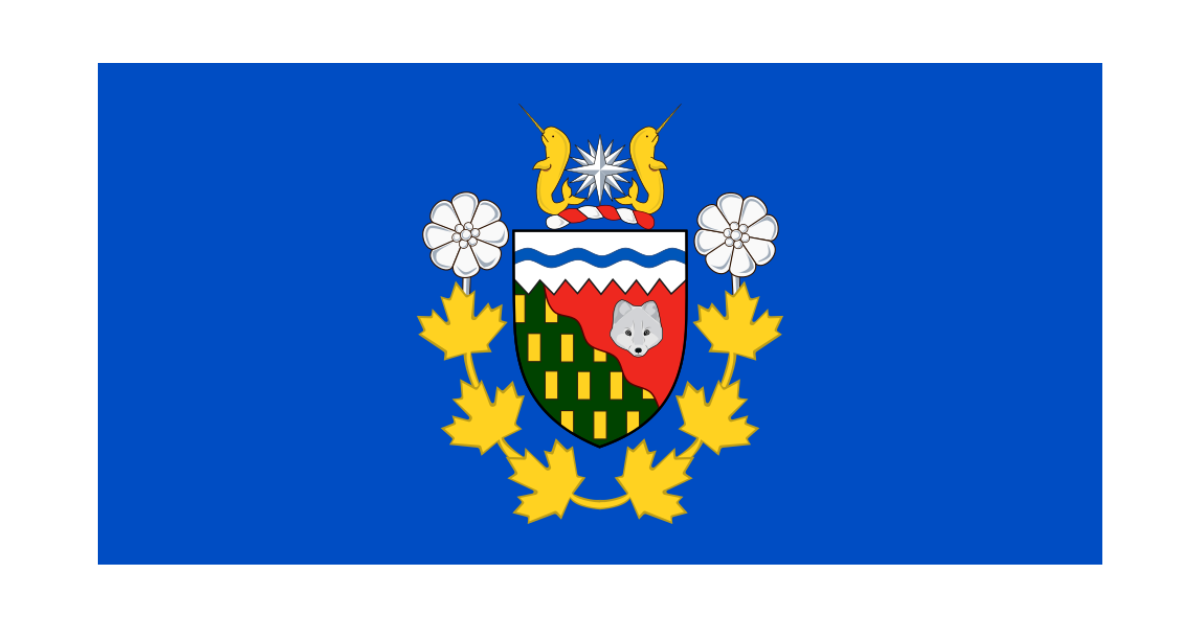
Flag of the Commissioner of the Northwest Territories
The flag of the Commissioner of the Northwest Territories is a striking emblem that embodies the authority of the federal representative in Canada’s northernmost jurisdiction. Unlike the national flag of Canada or the territorial flag, the Commissioner’s flag is a unique symbol that conveys both governmental presence and regional identity. It serves as a visual representation of the office, appearing on official buildings, vehicles, and during ceremonial occasions. The design of the flag combines elements that reflect the history, culture, and geography of the Northwest Territories while adhering to the traditions of Canadian governmental vexillology.
The flag itself features a distinctive design that centers on the coat of arms of the Northwest Territories. The coat of arms is a key heraldic symbol, rich with meaning, and it occupies the flag’s central field. The shield is divided into sections that symbolize the territory’s diverse landscapes and resources. At the top of the shield, a red section represents the territorial capital of Yellowknife, while the lower blue and white wavy lines signify the extensive rivers, lakes, and Arctic waters that define the region. A golden section depicts the forests and mineral wealth of the territory, highlighting its economic significance and natural bounty. The shield is supported by a stylized representation of the Commissioner’s authority, often featuring elements like a crown or other governmental insignia to denote federal oversight.
The field of the Commissioner’s flag is traditionally blue, echoing the official color often associated with Canadian viceregal and governmental flags. Blue symbolizes loyalty, authority, and the vast northern skies under which the people of the Northwest Territories live. The use of this color also creates a visual distinction between the Commissioner’s flag and the territorial flag, which emphasizes the green and gold of the land itself. This distinction is important because it clarifies that the flag represents the office of the Commissioner, not the territory or its government at large.
Functionally, the Commissioner’s flag serves several ceremonial and official purposes. It is flown at the Commissioner’s residence, on government buildings when the Commissioner is present, and during formal events such as territorial celebrations or visits by dignitaries. The flag’s presence signals the Commissioner’s authority and reinforces the link between the federal government and the Northwest Territories. It also represents a broader Canadian tradition of using flags to symbolize the offices of key governmental figures, similar to lieutenant governors in provinces or the Governor General at the national level.
In conclusion, the flag of the Commissioner of the Northwest Territories is more than a decorative banner; it is a symbol of governance, heritage, and regional identity. By incorporating the territorial coat of arms on a blue field, the flag reflects both the unique landscapes of the North and the federal authority embodied in the Commissioner’s office. Its ceremonial use strengthens the visibility of the office while promoting a sense of continuity within the broader Canadian tradition of official symbols. In essence, this flag encapsulates the intersection of authority, identity, and the natural beauty of one of Canada’s most remote and remarkable regions.
Recently Posted


Categories
- Alberta 25
- Armed Forces 37
- British Columbia 22
- Canada 303
- Cities 147
- County / Municipality / Regional District / Township 6
- Government 18
- Historical 3
- Indigenous 38
- International Flags 55
- International Organizations 5
- Manitoba 17
- Miscellaneous 4
- New Brunswick 8
- Newfoundland 12
- Northwest Territories 6
- Nova Scotia 13
- Nunavut 6
- Ontario 40
- Police 1
- Prince Edward Island 5
- Quebec 68
- Royalty 14
- Saskatchewan 13
- Schools 12
- Sports 24
- Yukon 4