Croatia
The flag of Croatia
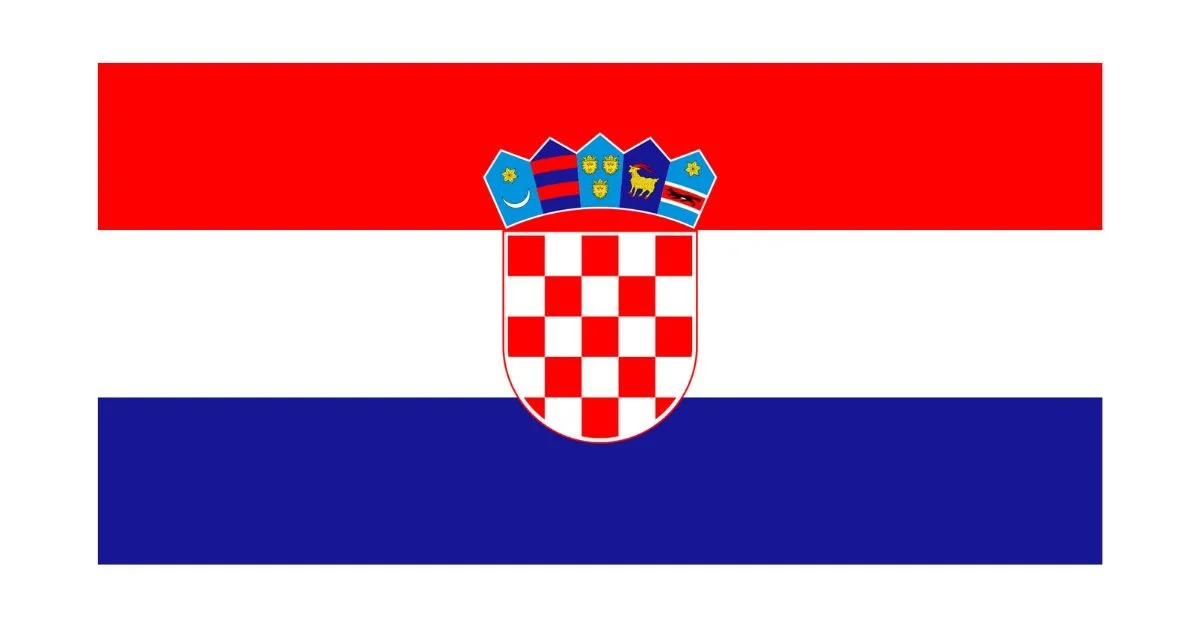
The flag of Croatia is a vivid emblem of the nation’s history, identity, and resilience. Officially adopted on December 21, 1990, shortly before Croatia declared independence from Yugoslavia, the flag combines historical symbolism with national pride. It consists of three horizontal stripes of red, white, and blue, with the iconic Croatian coat of arms prominently displayed in the center. This tricolor design and the distinctive crest together form one of the most recognizable flags in the Balkans and Europe.
The red, white, and blue horizontal stripes are inspired by the pan-Slavic colors, which have long been associated with Slavic unity and independence. These colors were first introduced by Slavic nations in the 19th century as a sign of solidarity and opposition to imperial rule. In the Croatian context, each color also has specific cultural and historical significance. Red symbolizes the struggles and sacrifices of the Croatian people, white stands for peace and unity, and blue represents freedom and hope for the future. These colors have been part of Croatian heraldry and national symbolism since the 19th century, when Croatia was part of the Austro-Hungarian Empire and later the Kingdom of Yugoslavia.
Centrally placed on the flag is the Croatian coat of arms, which adds a rich layer of historical and regional symbolism. The main shield consists of a checkerboard pattern—locally called the šahovnica—with 13 red and 12 white alternating fields. This symbol has represented Croatia for centuries and is believed to date back to at least the 10th century, when it was used by Croatian kings. It became a prominent national symbol in the 19th century during the Croatian national revival.
Above the checkerboard is a crown made up of five smaller shields, each representing a historical region of Croatia. From left to right, these are: the oldest known Croatian coat of arms (a crescent moon and six-pointed star on a blue field), the shield of Dubrovnik (two red stripes on dark blue), the shield of Dalmatia (three golden lions' heads on blue), the shield of Istria (a golden goat on blue), and the shield of Slavonia (a marten running across a red field with a white stripe and a six-pointed star). This composite crown unites the diverse historical territories of Croatia into a singular national identity.
The Croatian flag has undergone numerous transformations throughout history, particularly during times of political change. During the period of the Socialist Republic of Croatia (within Yugoslavia), a red star was added to the flag, which was removed after independence. The current design, with the traditional šahovnica and five-part crown, reflects Croatia’s medieval roots and its modern aspirations as a sovereign nation.
Recently Posted


Categories
- Alberta 25
- Armed Forces 37
- British Columbia 22
- Canada 303
- Cities 147
- County / Municipality / Regional District / Township 6
- Government 18
- Historical 3
- Indigenous 38
- International Flags 55
- International Organizations 5
- Manitoba 17
- Miscellaneous 4
- New Brunswick 8
- Newfoundland 12
- Northwest Territories 6
- Nova Scotia 13
- Nunavut 6
- Ontario 40
- Police 1
- Prince Edward Island 5
- Quebec 68
- Royalty 14
- Saskatchewan 13
- Schools 12
- Sports 24
- Yukon 4