Conseil de la Nation Innu Matimekush - Lac-John
The Flag of Conseil de la Nation Innu Matimekush - Lac-John
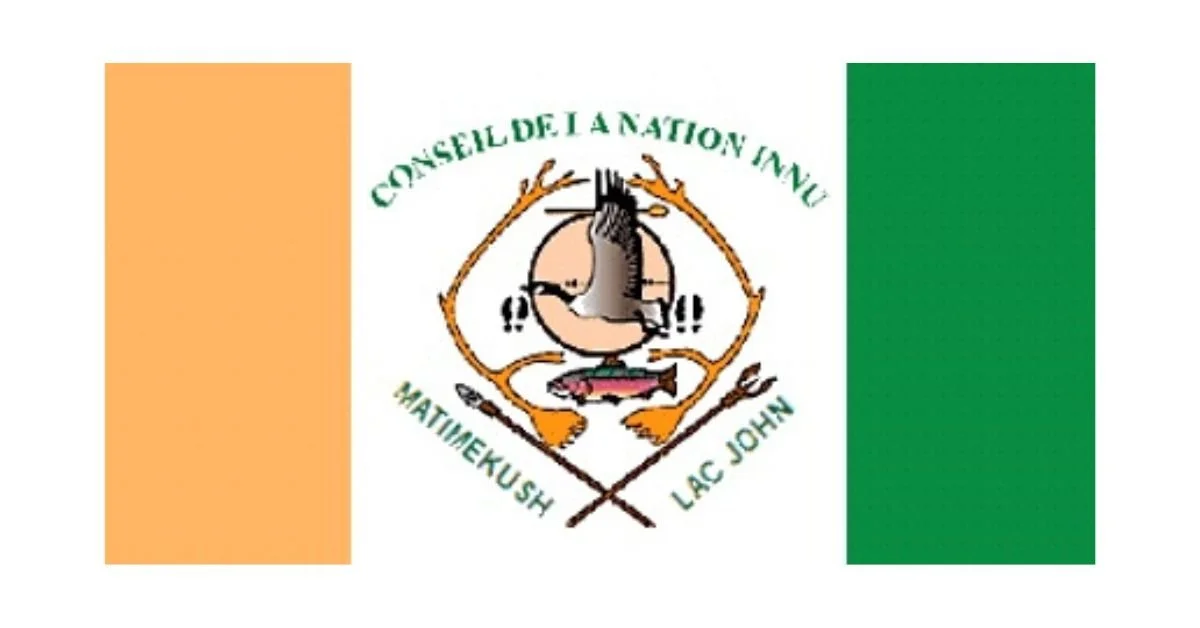
The flag of the Conseil de la Nation Innu Matimekush – Lac-John is a richly symbolic banner that embodies the identity, traditions, and values of the Innu community located in Schefferville, Quebec. Visually distinctive, the flag features a vertical tricolour of orange, white, and green, with a central emblem on the white band that conveys deep cultural meaning.
The flag’s background consists of three vertical stripes. The orange stripe on the hoist side symbolizes the warmth of the community and the rising sun, often linked to hope, renewal, and the beginning of life. The white central stripe stands for peace, harmony, and clarity. It acts as a backdrop to the emblem, highlighting its importance. The green stripe on the fly end represents the forests and natural environment that surround Matimekush and Lac-John—an area that forms part of the larger Innu territory of Nitassinan. This tricolour layout also reflects a visual balance between land (green), spirit (white), and vitality (orange), grounding the flag in both physical and metaphysical realms of Innu culture.
At the heart of the flag lies the council's crest, a complex and meaningful design that incorporates key elements of Innu identity. Caribou Antlers encircle the central image. The stylized antlers references the caribou, a sacred animal in Innu culture. The caribou is essential to traditional Innu life as a source of food, tools, and clothing. It also holds spiritual significance, symbolizing strength, survival, and respect for nature. Central to the crest is a goose in flight, representing the migratory cycles that have long guided Innu subsistence practices. Geese are associated with seasonal changes and traditional hunting activities. The goose also reflects the freedom and movement of the Innu across their vast territory.
Behind the goose, a circle—possibly representing a drum or the sun—is adorned with eagle feathers. The drum is a sacred symbol in many Indigenous cultures, signifying connection to the earth and to spiritual realms. Eagle feathers are often awarded as honours and represent leadership, bravery, and vision. At the base of the emblem, a traditional spear and paddle are crossed, signifying the Innu’s ability to navigate both land and water. This duality reflects their historic reliance on both hunting and canoe travel, which were essential for survival in northern Quebec. A fish appears in the center, beneath the goose. It highlights the importance of fishing to the community’s subsistence and traditional economy. Waterways are not only sources of nourishment but also spiritual lifelines connecting communities across Nitassinan. The words “Conseil de la Nation Innu” arch above the emblem, and “Matimekush” and “Lac-John” appear on either side below, clearly identifying the specific Innu communities united under this flag.
Altogether, the flag of the Conseil de la Nation Innu Matimekush – Lac-John is a vibrant visual expression of cultural identity and connection to the land. Every element—from the orange, white, and green tricolour to the central symbols of nature and spirituality—reflects the deep-rooted traditions, values, and sovereignty of the Innu people. It is not merely a flag, but a declaration of presence, resilience, and pride in a unique and enduring way of life.
Recently Posted
Categories
- Alberta 24
- Armed Forces 35
- British Columbia 21
- Canada 283
- Cities 138
- County / Municipality / Regional District / Township 5
- Government 17
- Historical 3
- Indigenous 36
- International Flags 52
- International Organizations 5
- Manitoba 17
- Miscellaneous 3
- New Brunswick 6
- Newfoundland 12
- Northwest Territories 5
- Nova Scotia 11
- Nunavut 6
- Ontario 37
- Police 1
- Prince Edward Island 5
- Quebec 61
- Royalty 13
- Saskatchewan 12
- Schools 10
- Sports 22
- Yukon 4